



Wet Trim vs. Dry Trim: Which Is Better for Cannabis?
Jun 18th 2026
Wet Trim vs. Dry Trim: Which Method Produces Better Cannabis?
One of the most debated topics in cannabis post-harvest processing is whether flower should be wet trimmed immediately after harvest or dried first and trimmed later.
Both methods are widely used throughout the industry, and both have their supporters. Wet trimming is often favored for its speed and efficiency, while dry trimming is generally preferred by cultivators focused on maximizing quality.
While every cultivation operation has different priorities, understanding how each approach affects the flower can help growers make better decisions.
What Is Wet Trimming?
Wet trimming is the process of removing leaves from the plant immediately after harvest, before the flower has begun drying.
Many growers choose this method because it can simplify handling and reduce the amount of plant material that must be dried.
Advantages of wet trimming include:
Faster processing after harvest
Reduced drying space requirements
Easier access to leaves while they are still extended away from the flower
Simplified workflow for some operations
For large-scale cultivators focused on throughput, these benefits can be attractive.
However, speed is only one part of the equation.
What Is Dry Trimming?
Dry trimming takes a different approach.
Instead of trimming immediately after harvest, the entire plant is hung and allowed to dry with the leaves still attached. Once the drying process is complete, the flower is bucked from the stems and trimmed.
Many experienced cultivators believe this approach produces a higher-quality finished product.
The reason is simple: the leaves remain around the flower throughout the drying process.
Why Whole-Plant Drying Matters
The leaves surrounding cannabis flowers serve as a natural protective layer during drying.
When leaves remain attached, they help slow moisture loss and reduce the direct exposure of the flower to the surrounding environment.
This more gradual drying process can help preserve characteristics growers work hard to achieve during cultivation.
Many cultivators report that whole-plant drying followed by dry trimming often results in:
Better terpene retention
Stronger aroma
Improved flavor
Brighter flower color
Better overall bag appeal
While results vary depending on genetics, environmental conditions, and drying techniques, many premium flower producers continue to favor whole-plant drying for these reasons.
The Role of Oxidation
One of the primary concerns with wet trimming is increased exposure during drying.
When leaves are removed immediately after harvest, the flower becomes more exposed throughout the drying process.
As the flower dries, oxygen exposure can contribute to oxidation, which may affect aroma, appearance, and terpene preservation.
This is one reason many cultivators believe dry trimming helps maintain a fresher, more vibrant final product.
The goal is not simply to dry the flower.
The goalis to preserve as much of the flower’s natural character as possible.
Why Many Growers Still Wet Trim
If dry trimming can offer quality advantages, why do so many cultivators continue to wet trim?
The answer is usually economics.
Whole-plant drying requires:
More drying space
More handling
Additional labor
More time
For many commercial operations, these factors significantly impact production costs.
As a result, growers often face a tradeoff between efficiency and quality.
Technology Is Changing the Equation
Historically, one of the biggest drawbacks of dry trimming has been labor.
Once flower is dried, trimming can become a slow and expensive process, especially when hand trimming is involved.
Fortunately, advances in trimming technology have helped reduce this challenge.
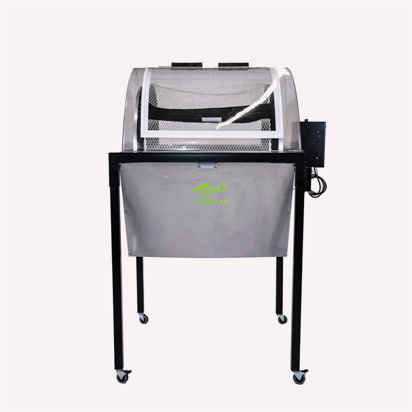
Modern trimming systems designed specifically for dry flower have made it possible for cultivators to preserve many of the benefits of whole-plant drying while improving efficiency and reducing labor costs.
This allows growers to focus on quality without creating major production bottlenecks.
Which Method Is Best?
There is no single answer that works for every cultivation facility.
Operations focused on maximum throughput may continue to prefer wet trimming.
Cultivators focused on premium flower quality often favor whole-plant drying followed by dry trimming.
Ultimately, the decision depends on a grower’s goals, available labor, facility design, and market expectations.
However, one principle remains consistent:
The quality of the finished flower is heavily influenced by what happens after harvest.
Drying, curing, trimming, and storage all play critical roles in preserving aroma, terpene content, appearance, and overall consumer experience.
The Bottom Line
The wet trim versus dry trim debate will likely continue for years.
But many experienced cultivators agree on one thing: preserving quality after harvest is just as important as producing quality during cultivation.
For growers seeking maximum aroma, terpene retention, color, and bag appeal, whole-plant drying followed by dry trimming remains one of the most widely respected approaches in the industry.
Because great cannabis isn’t just grown.
It’s preserved.